Understanding lab grown diamond certification: what to look for
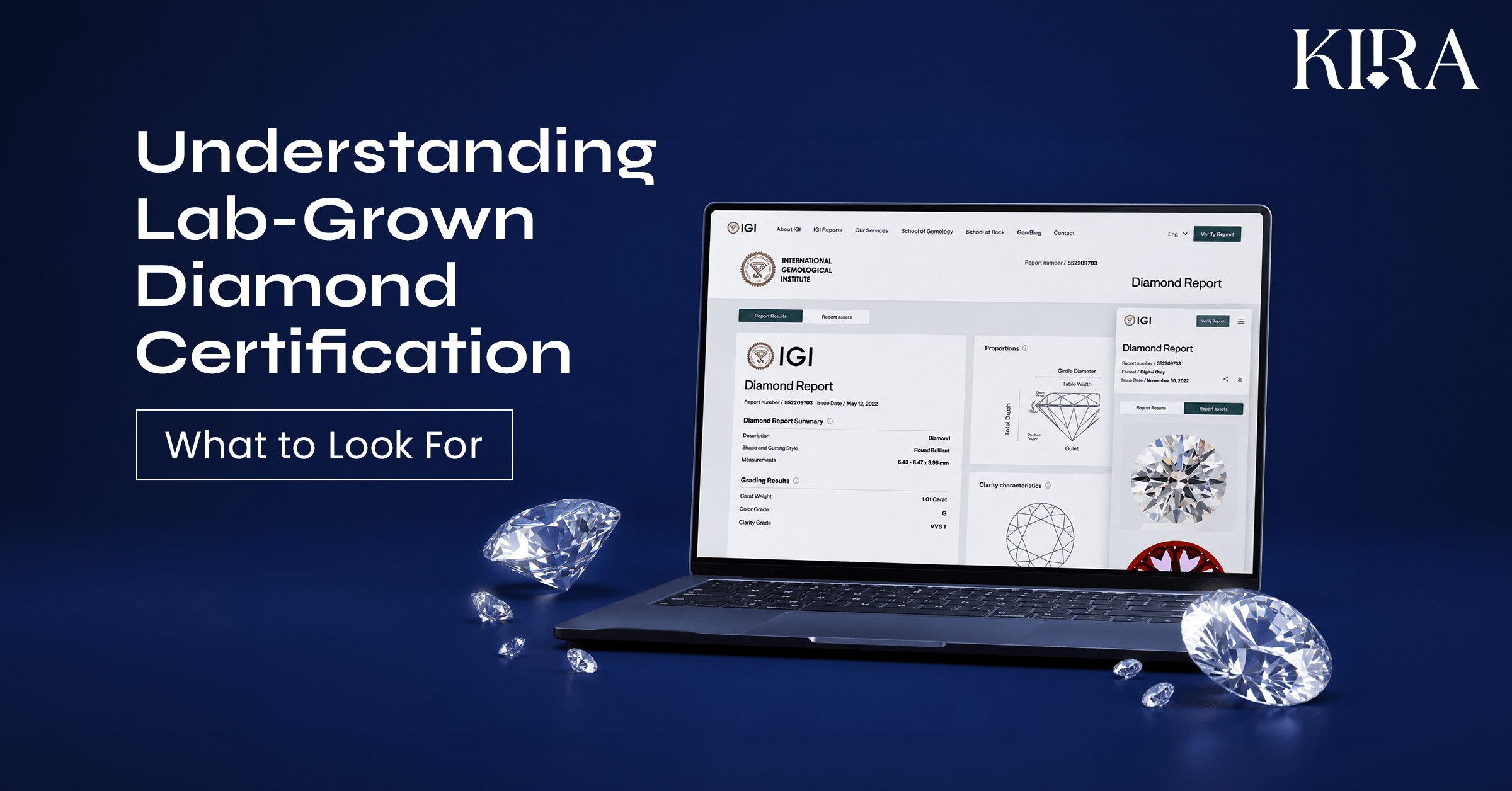
As lab grown diamonds become a central part of modern luxury, certification has moved from a nice to have to an essential component of trust and transparency. Whether you are a consumer buying an engagement ring or a jewellery brand sourcing from manufacturers, a lab grown diamond certificate ensures you know exactly what you are getting, and why it matters.
In an industry built on clarity, value and ethical sourcing, certification validates more than quality. It confirms authenticity, supports resale and insurance processes, and reinforces confidence in the category.
Why certification matters
Certification serves as an independent confirmation of what a stone is, and is not. For certified lab grown diamonds it plays several key roles:
- Authenticity assurance. It confirms the stone is a lab grown diamond, not a simulant like moissanite or cubic zirconia.
- Consumer trust. A certificate assures buyers and jewellers of quality, origin and grading.
- Resale and insurance. Certified stones are easier to appraise, insure and resell, especially for high value purchases.
Without documentation, even the most beautiful stone can raise questions. With it, the journey of the stone becomes verifiable.
Types of certification
Several global gemological laboratories issue certificates, but not all certifications carry the same weight.
Leading certification bodies
- GIA, the Gemological Institute of America. Known globally for strict grading standards. GIA certified lab grown diamonds are becoming more common, though GIA historically focused on natural stones.
- IGI, the International Gemological Institute. A preferred lab for certified lab grown diamonds, IGI offers comprehensive grading reports and has broad industry acceptance.
Grading reports and certificates
- A grading report provides a detailed analysis covering the 4Cs, growth method and additional remarks.
- A certificate may be a shorter summary used in commercial contexts.
For serious buyers and retailers, always seek full grading reports from recognised labs.
Key parameters to check
When reviewing a certificate, focus on these core components.
1. The 4Cs
- Cut. Impacts brilliance and symmetry.
- Clarity. Refers to internal inclusions or surface blemishes.
- Colour. Graded from D, colourless, to Z, light yellow or brown.
- Carat weight. Refers to the weight, not just the visual size.
These standards apply equally to lab grown and mined stones.
2. Growth method
Your certificate should clearly indicate whether the stone was created using CVD, chemical vapour deposition, or HPHT, high pressure high temperature. Each method produces stones differently, and transparency here reinforces the integrity of the product.
3. Laser inscriptions and report numbers
Most certified lab grown diamonds come with microscopic laser inscriptions on the girdle, matching the report number issued by the grading lab. This small but critical detail ensures traceability and authenticity.
Common myths
Lab grown diamonds are not certified
False. They are certified by major labs like IGI and GIA using the same standards as natural diamonds.
Certification standards are lower
False. The same 4C framework applies, and many labs issue side by side reports for both types.
You cannot resell lab grown diamonds
Not entirely true. Resale depends on documentation, market value and demand. Certified stones hold stronger resale value than uncertified ones.
How to verify a certificate
1. Use the lab's online report tool
Visit the website of IGI, GIA or the issuing body and enter the report number to access the official record.
2. Match the laser inscription
Check the inscription on the girdle using a jeweller's loupe or microscope. It should match the report number.
3. Verify all key parameters
Review the 4Cs, growth method, fluorescence and other details. These must align with what was communicated at purchase.
Choosing a certified supplier or manufacturer
For jewellery brands, wholesalers and retailers, sourcing from a manufacturer that provides certified lab grown diamonds is non negotiable. When selecting a supplier, ensure they:
- Work with IGI or GIA for certification.
- Offer both certified and non certified options depending on your pricing tier.
- Provide digital or physical grading reports with every stone.
- Maintain clear batch records for B2B audits and bulk orders.
Manufacturers who integrate certification into their standard process give partners confidence at every level, from design to display.
Conclusion
In the fast evolving world of lab grown diamonds, certification is more than paperwork. It is proof of authenticity, quality and accountability. For buyers and brands alike, choosing GIA or IGI graded stones ensures clarity and peace of mind.
As demand rises and sustainability takes centre stage, the importance of a verifiable certificate will only grow. Whether you are investing in a solitaire or building a fine jewellery collection, look for certified lab grown diamonds, because luxury today begins with trust.
At KIRA, our offering is defined by scale and precision. We operate the largest manufacturing facility in Surat, spanning 1,000,000 sq. ft. and supported by 8,000 plus machines. With a fully in house process from seed to finished jewellery, we ensure consistent quality and reliable supply.