What do consumers really think about lab grown diamonds?
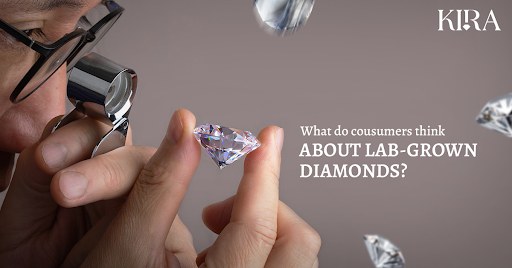
Lab grown diamonds are not just a trend, they are a shift in the jewellery industry. According to a report by Allied Market Research, the global lab grown diamond market was valued at $19.3 billion in 2020 and is projected to reach $49.9 billion by 2030, growing at a compound annual growth rate of 9.4% from 2021 to 2030. These stones are challenging traditional ideas of luxury and ethics, and their popularity is rising fast. But what do buyers really think?
In this article we look at buyer perceptions, covering the awareness, opinions and trends shaping the market. Whether you are a retailer, a jeweller or a wholesale buyer, these insights matter.
Consumer awareness and education
Level of awareness
Awareness has risen sharply in recent years, helped by more visibility in mainstream media and in jewellery stores. A survey by MVI Marketing found that 70% of buyers are now aware of lab grown diamonds, a big increase on previous years. However, while many have heard of them, not everyone fully understands what they are or how they differ from mined stones.
In our experience with clients, some are well versed in the differences, while others are surprised to learn that lab grown diamonds are chemically and physically identical to mined stones. This gap is both a challenge and an opportunity for the industry.
Sources of information
Buyers learn about lab grown diamonds through several channels. The same MVI Marketing survey found that 45% learned through online research, 35% were informed by jewellers, and 25% through social media platforms such as Instagram and Pinterest.
Social media has become a powerful tool for spreading awareness. Influencers and brands regularly showcase lab grown diamonds, highlighting their beauty, eco-friendliness and affordability.
Misconceptions
Several misconceptions persist. A common myth is that lab grown diamonds are somehow fake or inferior. In fact, studies show they have the same physical, chemical and optical properties as mined stones.
Another misconception is that they lack value or resale potential. The resale market is still developing, but their value is becoming better recognised as the market grows. A Bain & Company report from 2022 noted that while mined stones have traditionally held higher resale value, the gap is narrowing.
Consumer opinions and perceptions
Perceived value
Buyers increasingly see lab grown diamonds as an attractive option. Many appreciate that they can get a larger or higher-quality stone for the same price, or less, than a mined stone. A 2023 survey by the Jewelers Board of Trade found that 65% of respondents believed lab grown diamonds offered better value for money. This appeals particularly to younger buyers who want smart financial decisions without giving up quality.
Environmental and ethical considerations
One of the forces behind rising popularity, especially among younger buyers, is the environmental and ethical appeal. As concerns about climate change and ethical sourcing grow, many buyers are reconsidering mined stones.
A study by MVI Marketing found that roughly 70% of millennials are open to buying a lab grown diamond as an engagement ring centre stone, a 13% increase on their earlier 2017 research.
Lab grown diamonds are also free of the ethical concerns that have long affected the mined stone industry, such as conflict diamonds. For businesses, understanding these preferences is important. Retailers and wholesalers who highlight the environmental and ethical advantages are likely to attract a growing segment of the market.
Quality perception
On quality, lab grown diamonds are increasingly seen as comparable to mined stones, if not better. Advances in technology have allowed them to reach the same level of brilliance and durability.
A report from INSTORE Magazine notes that while 47% of buyers do not consider lab grown diamonds to be real, many still view them as fun and fashionable alternatives, particularly because of the lower cost and the ethical case. Jeweller Magazine reported that 80% of surveyed buyers were aware of lab grown diamonds, coupled with positive reactions around the size-to-value equation and the lower environmental impact.
In our experience, many customers are surprised at how indistinguishable lab grown diamonds are from mined stones.
Price sensitivity and affordability
Price comparison
Price is one of the biggest factors in buying decisions. Lab grown diamonds are generally more affordable than mined stones, often costing 30 to 40% less, according to a report by Bain & Company.
Budget-friendly appeal
Affordability appeals particularly to budget-conscious buyers who want to maximise their purchasing power without giving up quality or size. This makes lab grown diamonds a popular choice for engagement rings and other significant purchases.
Luxury versus affordability
Lab grown diamonds are also gaining ground in the luxury market. A De Beers report noted that 20% of high-income buyers now consider lab grown diamonds for their ethical and sustainable qualities as well as their appeal as a luxury product. This shift is partly due to growing acceptance among high-end jewellers and designers.
Trends in consumer preferences
Demographic insights
Preferences vary across demographics. Millennials and Gen Z are leading adoption, drawn by the eco-friendly and ethical case as well as affordability. A 2022 MVI Marketing survey found that 80% of millennials and Gen Z are open to buying lab grown diamonds, compared to only 40% of baby boomers.
Geographically, lab grown diamonds are gaining popularity in urban areas and regions with a strong focus on sustainability and ethical consumption.
Trends in purchase behaviour
There is a clear move towards buying online. A study by The Knot found that 60% of lab grown diamond purchases in 2023 were made online, compared to 45% for mined stones. Convenience and the ability to compare prices make online shopping attractive.
In-store purchases remain significant, especially for buyers who want to see and feel the stone first. Retailers who blend online and in-store experiences are likely to benefit.
Conclusion
Understanding buyer perceptions is essential for anyone in this industry. As awareness and acceptance keep growing, lab grown diamonds are becoming a more viable and attractive option for a wide range of buyers.
For companies in this space, it is important to educate buyers, dispel myths, and highlight the real benefits: affordability, ethical production and environmental sustainability.