




Why Jewelry Supply Chain Transparency Matters in Today’s Jewelry Market
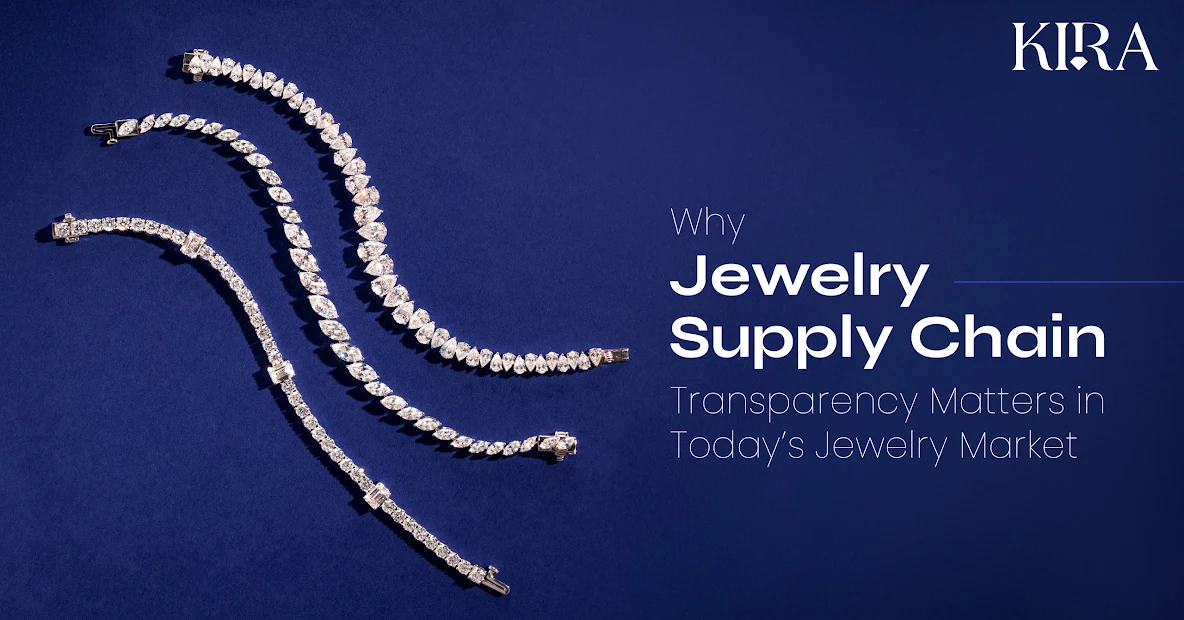
Breaking down traceability, accountability, and consumer trust — and how KIRA leads the way.
In 2025, transparency is no longer a luxury in the jewelry world — it is a non-negotiable expectation. Today’s consumers want to know more than just what they are buying; they want to know where it came from, how it was made, and who stands behind it. This demand for visibility across the jewelry supply chain has become a defining standard, reshaping how ethical luxury is defined.
From millennial bridal shoppers to global retailers, the jewelry industry is witnessing a shift where trust is the new currency of luxury. And jewelry supply chain transparency is at the center of that transformation.
1. Traceability: The Foundation of Modern Jewelry Purchasing
Traceability means being able to follow a diamond’s journey from its origin to the final jewelry piece. In traditional jewelry supply chains, this was often fragmented — but lab-grown diamonds have rewritten the rules.
Consumers today expect clarity on:
- where the diamond was grown
- how it was processed
- what technologies were used
- who handled it across stages
- assurance of ethical manufacturing
At KIRA, traceability is built into the system — not as a marketing add-on but as an operational standard. With one of Asia’s largest growth capacities and a 1,000,000 sq. ft. vertically integrated manufacturing facility, each KIRA diamond moves through a controlled, documented, quality-driven process.
This gives buyers a clean, verifiable origin story — something the market increasingly values, especially as jewelry supply chain transparency becomes a key factor in purchase decisions.
2. Accountability: Brands Must Take Responsibility
Accountability goes beyond tracking. It’s about the commitment a company makes to uphold ethical practices, quality consistency, and social responsibility at every stage.
Today’s jewelry buyers expect brands to be accountable for:
- fair labor practices
- safe working conditions
- responsible energy consumption
- unbiased grading and sorting
- transparent pricing structures
KIRA’s approach reflects long-term responsibility, supported by:
- 40+ years of diamond industry experience
- 10,500+ artisans and technicians working under global-standard systems
- A 75 MW solar plant that supports sustainable production
- A fixed-price policy for consistency and fairness in trade
In a transparent jewelry supply chain, accountability is not an afterthought — it is the framework for everything that follows.
3. Consumer Trust: The True Differentiator in 2025
Trust is what transforms a diamond purchase from a transaction into a relationship.
In the USA — one of the most transparency-conscious markets — shoppers care deeply about authenticity, origin, and ethics. A transparent jewelry supply chain builds:
- confidence in quality
- reassurance about ethical sourcing
- loyalty toward the brand
- willingness to pay premium for trusted manufacturers
- repeat business and long-term partnerships
The more open a brand is, the stronger its emotional and commercial connection with its audience.
This is where KIRA has built its global edge. By offering:
- vertically integrated production
- consistent assortments
- clear documentation
- on-ground viewings and open communication
- direct relationships with retailers and distributors
- certifications from Smeta, Sedex, and Diatrace
KIRA has positioned itself as one of the most trusted names in the global lab-grown diamond ecosystem, backed by the legacy and goodwill of the KIRAN FAMILY.
4. Why Transparency Matters Even More for Lab-Grown Diamonds
Lab-grown diamonds are technologically advanced, and the market is rapidly growing. With scale, jewelry supply chain transparency becomes essential:
- It helps dealers differentiate between suppliers
- It ensures retailers understand the growth and cutting standards
- It gives end consumers confidence in choosing lab-grown over mined
- It protects the category from misinformation
Since lab-grown diamonds rely on innovation and precise engineering, clear disclosures about production, treatments (if any), and calibration standards are vital.
KIRA’s reputation is strengthened by its large-scale, traceable, consistent output — giving both B2B and B2C buyers confidence in their purchase.
5. The Future: Transparency Will Define Market Leaders
The jewelry world is becoming more digital, more informed, and more demanding. Brands that win will be those that can prove — not just promise — their integrity.
Jewelry supply chain transparency will influence:
- retailer partnerships
- platform listings
- certifications
- customer loyalty
- long-term brand value
As one of the world’s largest producers of CVD lab-grown diamonds, KIRA is already shaping this future, setting a benchmark for clarity, accountability, and trust.
Conclusion: Transparency Isn’t a Trend — It’s the New Standard of Luxury
In today’s jewelry market, jewelry supply chain transparency builds trust. Trust builds preference. And preference builds long-term success.
From advanced traceability systems to ethically powered manufacturing, KIRA proves that when the journey of a lab grown diamond is clear, so is its value. As consumer expectations continue to rise, transparency won’t just matter — it will define the brands that lead the global jewelry industry.